


40% More Production with Improved Wastewater Treatment Performance
How wastewater treatment optimisation helped one site increase production capacity while reducing chemical consumption, BOD concentrations and sludge generation.
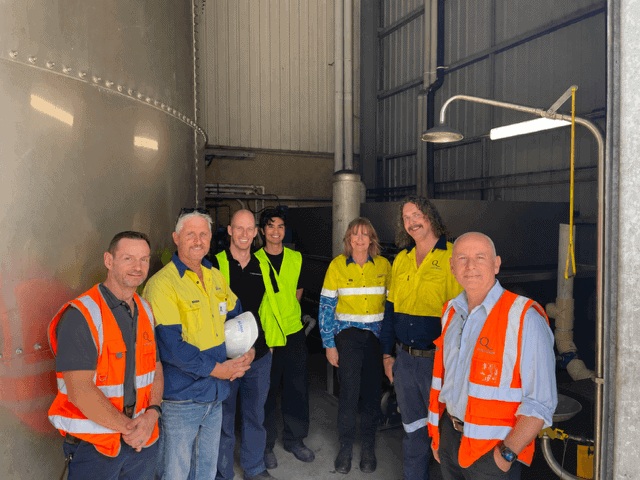
Qtech Australia recently welcomed Craig Earl, Head of Operations Technology at Sydney Water, to one of our customer sites to see firsthand the wastewater treatment improvements being achieved through ongoing process optimisation.
The site has experienced a significant increase in production, with throughput growing by approximately 40%.
Normally, greater production places additional pressure on a wastewater treatment plant. More wastewater can mean greater chemical demand, increased sludge generation and greater risk of instability within the treatment process.
At this site, the outcome has been very different.
Increasing Capacity Without Increasing Waste
Working closely with the customer, Qtech reviewed and refined the wastewater treatment process with a focus on improving the way the entire system operates.
The improvements have resulted in:
- Reduced chemical consumption
- Lower BOD concentrations in treated wastewater
- Improved treatment plant reliability
- Reduced sludge generation and disposal requirements
- Capacity to support approximately 40% greater production throughput
Rather than simply adding more chemicals or equipment to manage increased demand, the focus has been on understanding how each part of the treatment process works together.
Looking at Wastewater Treatment as a Complete Process
Effective wastewater treatment is rarely about one piece of equipment or one chemical.
Plant performance is influenced by the interaction between wastewater characteristics, chemical dosing, equipment, automation, process control and day-to-day operation.
Qtech combines these areas to identify where improvements can be made across the complete treatment process.
At this site, ongoing optimisation has helped the customer accommodate substantially greater production while improving the efficiency and consistency of the wastewater treatment system.
This has also reduced the amount of waste requiring disposal, providing both operational and environmental benefits.
Practical Improvements at Site Level
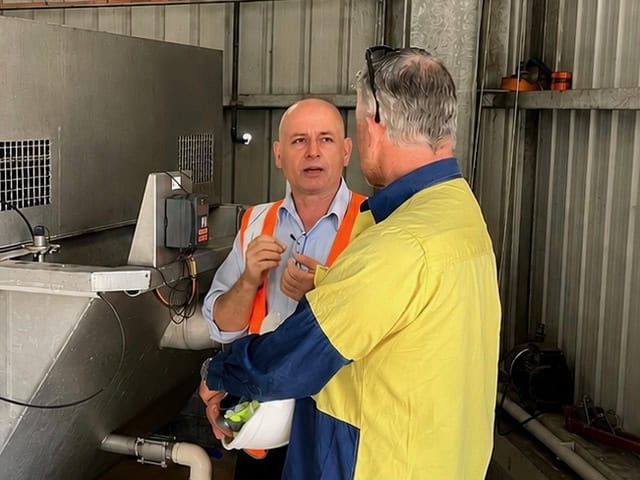
Craig Earl’s visit provided an opportunity to review the treatment plant and discuss the practical improvements that have been implemented as production requirements have changed.
For Qtech, this type of ongoing site involvement is an important part of wastewater treatment.
Conditions change. Production changes. Wastewater changes.
Treatment systems need to be able to respond.
By combining process engineering, chemical treatment expertise, automation and ongoing operational support, Qtech works with customers to improve plant performance rather than simply react to problems when they occur.
The results at this site demonstrate that greater production does not necessarily have to mean greater chemical consumption, waste generation or treatment complexity.
Sometimes the biggest improvement comes from making the existing process work better.
Is Your Wastewater Treatment Keeping Up with Production?
If production has increased, wastewater quality has changed or your treatment plant is using more chemicals than it used to, it may be worth reviewing the process as a whole.
Talk to Qtech about a wastewater treatment review.
Tell us what is happening on your site and our team will help identify the most practical next step.
Results are specific to this site’s wastewater characteristics, operating conditions and treatment process. Outcomes will vary between facilities.